What to do for a Sprained Ankle: Immediate & Long-Term Care
what to do for a sprained ankle

What to do for a Sprained Ankle: Immediate & Long-Term Care

Navigate the path to recovery with expert-backed strategies for immediate care and effective rehabilitation of your sprained ankle.

Start Your Recovery Now

Key Takeaways

  • ✓ Ankle sprains are common injuries, often occurring during sports or everyday activities.
  • ✓ The RICE protocol (Rest, Ice, Compression, Elevation) is crucial for immediate sprain management.
  • ✓ Severity ranges from mild (grade 1) to severe (grade 3), dictating recovery time and treatment.
  • ✓ Early mobilization and rehabilitation exercises are vital for restoring strength and preventing re-injury.

How It Works

1
Assess the Injury

Immediately after the injury, try to determine the severity. Look for swelling, bruising, and assess your ability to bear weight.

2
Apply RICE Protocol

Implement Rest, Ice, Compression, and Elevation as soon as possible. This minimizes swelling and pain, laying the groundwork for recovery.

3
Seek Medical Evaluation

Consult a healthcare professional, especially if pain is severe, you can't bear weight, or swelling is extensive. They can rule out fractures and grade the sprain.

4
Begin Rehabilitation

Once advised by your doctor, start a tailored rehabilitation program. This includes exercises to restore range of motion, strength, and proprioception.

Understanding Your Ankle Sprain: Types and Severity
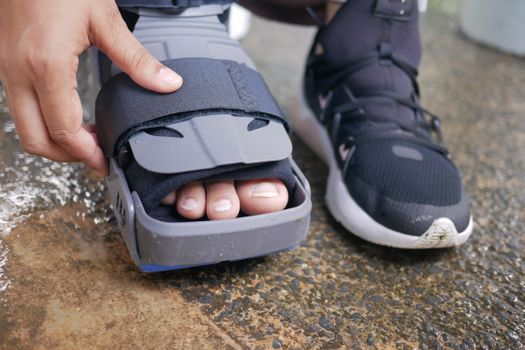
Detailed close-up of a foot in an orthopedic brace, highlighting post-injury recovery. Photo: Towfiqu barbhuiya / Pexels
A sprained ankle occurs when the strong ligaments that support the ankle stretch beyond their limits or tear. This common injury can happen to anyone, from athletes to individuals simply stepping off a curb incorrectly. Understanding the nature and severity of your sprain is the first critical step in knowing what to do for a sprained ankle and embarking on an effective recovery. The ankle joint is a complex structure, primarily stabilized by three sets of ligaments: the lateral ligaments (on the outside of the ankle), the medial ligaments (on the inside), and the syndesmotic ligaments (connecting the two lower leg bones above the ankle). The vast majority of ankle sprains, approximately 85%, involve the lateral ligaments, often caused by the foot rolling inward, a movement known as an inversion sprain. Eversion sprains, where the foot rolls outward, are less common but often more severe, impacting the stronger medial ligaments. Ankle sprains are typically classified into three grades based on the extent of the ligament damage: * **Grade 1 (Mild Sprain):** This involves stretching of the ligament fibers with minimal tearing. You might experience mild pain, tenderness, and some swelling. Walking is usually possible, though it might be uncomfortable. Stability of the ankle joint remains good. Recovery typically takes a few days to a couple of weeks with proper care. This is often the easiest to manage with immediate home care, but still requires attention to prevent recurrence. * **Grade 2 (Moderate Sprain):** This grade involves a partial tear of the ligament. You'll likely experience more significant pain, moderate swelling, and bruising. Walking and bearing weight can be difficult and painful, and the joint might feel somewhat unstable. The ankle may be stiff, and range of motion could be limited. Recovery for a moderate sprain can range from three to six weeks, often requiring physical therapy to regain full function and stability. * **Grade 3 (Severe Sprain):** This is the most serious type, involving a complete rupture of one or more ligaments. You will experience severe pain, extensive swelling, and significant bruising. Bearing weight is usually impossible, and the ankle joint will feel very unstable. In some cases, a 'pop' sound might have been heard at the time of injury. Recovery for a severe sprain can take several months, often involving a prolonged period of immobilization, intensive physical therapy, and in rare cases, surgical intervention. It is crucial to seek immediate medical attention for a suspected Grade 3 sprain to ensure proper diagnosis and treatment planning. Distinguishing between these grades can sometimes be challenging without medical expertise. While initial symptoms can offer clues, a definitive diagnosis often requires a physical examination by a doctor, and sometimes imaging tests like X-rays (to rule out a fracture) or an MRI (to assess soft tissue damage). Understanding the grade of your sprain directly influences the treatment plan and expected recovery timeline, making it a foundational piece of knowledge for effective management of what to do for a sprained ankle. Early and accurate assessment can significantly impact the long-term health and stability of your ankle. For more details on injury assessment, refer to our guide on evaluating sports injuries.

Immediate Actions: The RICE Protocol and Beyond for Ankle Sprains
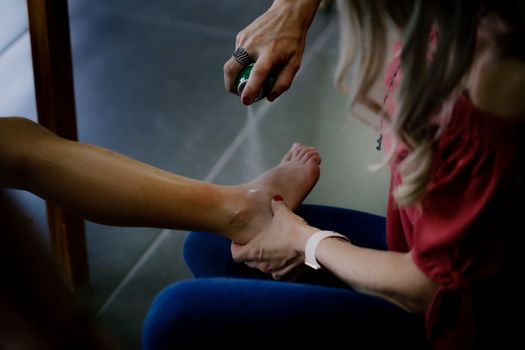
Close-up of a woman applying first aid spray to an injured foot indoors. Photo: Vidal Balielo Jr. / Pexels
When you're asking what to do for a sprained ankle immediately after the injury, the RICE protocol is universally recommended as the first line of defense. This acronym stands for Rest, Ice, Compression, and Elevation, and it's designed to minimize swelling, reduce pain, and protect the injured ligaments from further damage. Implementing RICE promptly can significantly impact the speed and quality of your recovery. * **Rest:** As soon as you suspect an ankle sprain, stop any activity that caused the injury and avoid putting weight on the affected ankle. Continuing to use a sprained ankle can worsen the injury, increase swelling, and prolong recovery. Depending on the severity of the sprain, this rest period might last from a few days to several weeks. Crutches may be necessary to keep weight off the ankle, especially for moderate to severe sprains. Listen to your body and avoid activities that cause pain. * **Ice:** Apply ice to the injured area as soon as possible. Ice helps to constrict blood vessels, which reduces swelling, bruising, and pain. Use an ice pack wrapped in a thin towel to prevent frostbite, and apply it for 15-20 minutes at a time, every 2-3 hours, for the first 24-48 hours after the injury. Avoid applying ice directly to the skin. This immediate cooling effect is crucial for managing the initial inflammatory response. * **Compression:** Apply a compression bandage, such as an elastic ace bandage, to the ankle. Wrap it firmly but not too tightly, ensuring it doesn't cut off circulation (check for numbness, tingling, or increased pain). Compression helps to reduce swelling by preventing fluid buildup in the injured area. Start wrapping from the toes and move up towards the calf, overlapping each layer by about half. Remove the bandage periodically to allow for blood flow and reapply as needed. * **Elevation:** Elevate your ankle above the level of your heart as much as possible, especially during the first 24-48 hours. This uses gravity to help drain excess fluid from the injured area, further reducing swelling and throbbing pain. You can achieve this by propping your foot up on pillows while lying down or sitting. Elevating the ankle is particularly effective when combined with icing. Beyond the RICE protocol, over-the-counter pain relievers like ibuprofen (Advil, Motrin) or naproxen (Aleve) can help manage pain and reduce inflammation. Always follow dosage instructions and consult a pharmacist or doctor if you have any underlying health conditions or are taking other medications. While RICE is foundational, it’s important to know when to seek professional medical attention. If you experience severe pain, cannot bear any weight on your ankle, notice significant deformity, or if swelling and bruising do not improve after 2-3 days of home care, it's crucial to see a doctor. A medical professional can accurately diagnose the severity of the sprain, rule out a fracture, and recommend a tailored treatment plan, which may include crutches, a walking boot, or referral to a physical therapist. Don't underestimate the importance of early diagnosis, especially if you suspect a Grade 2 or 3 sprain; timely intervention can prevent chronic instability and future re-injuries.

Rehabilitation and Long-Term Recovery for Ankle Stability

Detailed close-up of a foot in an orthopedic brace, highlighting post-injury recovery. Photo: Towfiqu barbhuiya / Pexels
Once the initial pain and swelling subside, typically after the first few days to a week, the focus shifts from immediate injury management to rehabilitation. This phase is critical for restoring full function to your ankle, preventing chronic instability, and significantly reducing the risk of future sprains. Knowing what to do for a sprained ankle in this long-term recovery phase involves a structured approach, often guided by a physical therapist. The goal is to gradually regain range of motion, strength, and proprioception (your body's sense of its position in space). **Early Mobilization and Range of Motion (ROM) Exercises:** Contrary to older advice, complete immobilization for extended periods is generally not recommended for most ankle sprains, as it can lead to stiffness and muscle atrophy. Once your doctor or physical therapist gives the green light, gentle, pain-free range of motion exercises should begin. These might include: * **Ankle Alphabet:** Sit with your leg extended and pretend to write the letters of the alphabet in the air with your toes. This encourages movement in all directions. * **Ankle Circles:** Gently rotate your ankle clockwise and counter-clockwise. * **Dorsiflexion/Plantarflexion:** Point your toes up towards your shin (dorsiflexion) and then down away from your body (plantarflexion). These exercises should be performed several times a day, always staying within a pain-free range. The aim is to slowly increase flexibility and prevent stiffness without stressing the healing ligaments. **Strengthening Exercises:** As your pain decreases and range of motion improves, strengthening exercises become paramount. These focus on rebuilding the muscles around the ankle that support the joint. Key exercises include: * **Resistance Band Exercises:** Using a resistance band, perform dorsiflexion, plantarflexion, inversion (turning the sole inward), and eversion (turning the sole outward) against the band's resistance. Start with light resistance and gradually increase as strength improves. * **Calf Raises:** Stand and slowly raise yourself onto the balls of your feet, then lower down. This strengthens the calf muscles, which are important for ankle stability. * **Toe Raises:** Lift your toes off the ground while keeping your heels down, strengthening the shin muscles. **Balance and Proprioception Training:** One of the most overlooked aspects of ankle sprain recovery is the restoration of proprioception. When ligaments are stretched or torn, the nerve endings within them that provide feedback to the brain about joint position are also damaged. This loss of proprioception makes the ankle more susceptible to re-injury. Balance exercises help retrain these pathways: * **Single-Leg Stance:** Stand on the injured leg for 30 seconds, then switch. Progress by closing your eyes or standing on an unstable surface like a pillow or balance board. * **Heel-to-Toe Walk:** Walk in a straight line, placing the heel of one foot directly in front of the toes of the other. * **Balance Board/Wobble Board:** These tools are excellent for challenging ankle stability and proprioception under controlled conditions. **Gradual Return to Activity:** Returning to sports or strenuous activities too soon is a common mistake that leads to re-injury. Your physical therapist will guide you through a phased return-to-activity program. This might involve light jogging, then progressively increasing intensity, incorporating agility drills, and sport-specific movements. Ankle bracing or taping can provide additional support during this transition period. The entire rehabilitation process can take anywhere from a few weeks for a mild sprain to several months for a severe one. Consistency and patience are key. Neglecting rehabilitation can lead to chronic ankle instability, a condition where the ankle repeatedly gives way, increasing the risk of future sprains and potentially developing osteoarthritis. Understanding and committing to this comprehensive rehabilitation plan is essential for a complete and lasting recovery when considering what to do for a sprained ankle. For advanced recovery techniques, consider exploring physical therapy for joint health.

Common Mistakes and Prevention Strategies for Ankle Sprains

Top view of a bandaged foot resting on a bed, depicting injury and recovery. Photo: Towfiqu barbhuiya / Pexels
Even with the best intentions, individuals often make mistakes during their ankle sprain recovery, which can prolong healing or lead to chronic issues. Recognizing these pitfalls and implementing effective prevention strategies are crucial aspects of knowing what to do for a sprained ankle. **Common Mistakes During Recovery:** * **Stopping RICE Too Soon:** While the acute phase is typically 24-48 hours, some individuals cease RICE protocols prematurely, especially compression and elevation. Swelling can return, hindering the healing process. Continue these measures as needed, particularly after activity or at the end of the day, until swelling is consistently resolved. * **Ignoring Pain Signals:** Pushing through pain during rehabilitation exercises is counterproductive. Pain is your body's way of telling you that you're doing too much too soon. While some discomfort is expected as you stretch and strengthen, sharp or increasing pain indicates you should stop or modify the activity. * **Skipping Rehabilitation Exercises:** Many people feel better after the initial swelling subsides and neglect the crucial strengthening and balance exercises. This is a significant mistake, as it leaves the ankle vulnerable to re-injury due to lingering weakness and proprioceptive deficits. Consistent adherence to a prescribed rehab program is vital. * **Returning to Activity Too Quickly:** The desire to get back to sports or daily routines is strong, but an ankle that hasn't fully regained strength, stability, and proprioception is a prime candidate for another sprain. A premature return can turn a single injury into a chronic problem, potentially requiring more drastic interventions. * **Not Seeking Professional Help:** For anything beyond a very mild sprain, self-diagnosis and treatment can be risky. Failing to see a doctor can mean missing a fracture or misjudging the sprain's severity, leading to inappropriate treatment and prolonged recovery. **Prevention Strategies:** Preventing ankle sprains is always better than treating them. Incorporating these strategies into your routine, especially if you've had a previous sprain, can significantly reduce your risk: * **Warm-Up Properly:** Before any physical activity, perform dynamic warm-up exercises that prepare your muscles and joints for movement. This increases blood flow and flexibility, making ligaments more pliable. * **Wear Appropriate Footwear:** Choose shoes that provide good ankle support and cushioning, especially during sports or activities that involve uneven terrain. Replace worn-out athletic shoes regularly, as their support and shock absorption capabilities diminish over time. * **Strengthen Ankle Muscles:** Regular exercises to strengthen the muscles surrounding the ankle (peroneals, tibialis anterior, calf muscles) are crucial. This proactive strengthening acts as a natural brace for the joint. * **Improve Balance and Proprioception:** Incorporate balance exercises (single-leg stands, balance board work) into your fitness routine. This enhances your body's ability to react quickly and prevent the ankle from rolling in precarious situations. * **Be Mindful of Surfaces:** Pay attention to where you are walking or running. Uneven surfaces, holes, or slippery conditions are common culprits for ankle sprains. Adjust your speed and awareness accordingly. * **Listen to Your Body:** If your ankles feel tired, weak, or unstable, take a break. Pushing through fatigue can compromise your form and increase your risk of injury. * **Ankle Bracing/Taping:** If you have a history of ankle sprains or participate in high-risk sports, consider using an ankle brace or having your ankle taped by a professional. This provides external support and can significantly reduce the risk of re-injury. However, it's important not to rely solely on external support; underlying strength and balance are still paramount. By avoiding common mistakes and proactively adopting prevention strategies, you empower yourself to achieve a more complete and lasting recovery, minimizing the chances of future ankle issues. This holistic approach to what to do for a sprained ankle ensures long-term ankle health and stability.

Comparison

Treatment AspectMild Sprain (Grade 1)Moderate Sprain (Grade 2)Severe Sprain (Grade 3)
Initial Care (RICE)Essential, 1-2 daysEssential, 3-5 daysEssential, 5-7+ days
Weight BearingUsually tolerable, with discomfortDifficult, often requires crutchesImpossible, requires crutches/boot
Medical ConsultationRecommended if symptoms persistStrongly recommended, often requiredImmediate, crucial for diagnosis
ImmobilizationMinimal, brief support tapeBrace/boot for 2-4 weeksBoot/cast for 4-6+ weeks
Physical TherapyOptional, focus on home exercisesRecommended, 3-6 weeksMandatory, 6-12+ weeks
Return to Activity1-2 weeks (light)3-6 weeks (gradual)3-6 months (gradual, monitored)
Risk of Re-injuryLow if rehab completedModerate if rehab incompleteHigh if rehab incomplete/skipped

What Readers Say

★ ★ ★ ★ ★

"When I rolled my ankle playing soccer, I immediately looked up what to do for a sprained ankle. Following the RICE protocol strictly for the first 48 hours made a huge difference in reducing swelling and pain. I genuinely believe it cut down my initial recovery time significantly."

Sarah J. · Austin, TX
★ ★ ★ ★ ★

"I thought my sprain was minor, but this guide encouraged me to see a doctor. Turns out it was a Grade 2! Their advice on what to do for a sprained ankle, especially the importance of physical therapy, was spot on. I'm now back to running without any issues."

Mark D. · Chicago, IL
★ ★ ★ ★ ★

"After multiple sprains, I finally understood the role of balance exercises from this article. Incorporating single-leg stands and wobble board exercises into my routine has strengthened my ankles dramatically. I haven't had a re-sprain in over a year, a concrete result I'm thrilled with."

Emily R. · Denver, CO
★ ★ ★ ★ ★

"The information on grades of sprains was very helpful in understanding my injury. While I wish there was a bit more on specific types of braces, the overall guidance on what to do for a sprained ankle, particularly the emphasis on gradual return to activity, was invaluable for my recovery."

David L. · Miami, FL
★ ★ ★ ★ ★

"As a hiker, knowing what to do for a sprained ankle is crucial. This article's detailed breakdown of prevention and rehabilitation has become my go-to resource. It's helped me not only recover from a recent trail mishap but also implement strategies to avoid future injuries on uneven terrain."

Jessica M. · Seattle, WA

Frequently Asked Questions

How long does a sprained ankle take to heal?

The healing time for a sprained ankle varies significantly based on its severity. A mild (Grade 1) sprain might heal in 1-3 weeks, while a moderate (Grade 2) sprain can take 3-6 weeks. A severe (Grade 3) sprain, involving a complete ligament tear, could require 3-6 months or even longer for full recovery, often with extensive rehabilitation.

Can I walk on a sprained ankle?

For a mild sprain, you might be able to walk with some discomfort. However, for moderate to severe sprains, walking can be very painful and may worsen the injury. It's generally recommended to avoid weight-bearing on the injured ankle, especially in the first 24-48 hours, and to use crutches if bearing weight causes pain. Always consult a doctor for guidance.

What kind of exercises should I do for a sprained ankle?

Once initial pain and swelling subside, a progressive exercise program is crucial. Start with gentle range of motion exercises like ankle circles and alphabet tracing. Gradually add strengthening exercises using resistance bands, calf raises, and toe raises. Finally, incorporate balance and proprioception training such as single-leg stands and wobble board exercises, all under professional guidance.

Is surgery ever required for a sprained ankle?

Surgery for a sprained ankle is rare and typically reserved for very severe cases, such as a complete tear of multiple ligaments that don't heal with conservative treatment, or if there's chronic ankle instability after extensive rehabilitation. It's usually considered only after non-surgical options have been exhausted and the ankle remains unstable.

How does taping or bracing compare to natural recovery for a sprained ankle?

Taping or bracing provides external support to an injured ankle, which can help stabilize the joint and prevent re-injury, especially during the early stages of recovery or when returning to activity. While helpful for support, they don't replace the need for natural recovery through strengthening and rehabilitation exercises. Natural recovery builds intrinsic strength and proprioception, which is essential for long-term stability, whereas taping/bracing offers temporary external assistance.

Who should seek immediate medical attention for an ankle injury?

You should seek immediate medical attention if you experience severe pain, cannot bear any weight on your ankle, notice significant swelling or bruising that appears rapidly, observe any deformity around the ankle joint, or if the pain and swelling do not improve after 2-3 days of home care with the RICE protocol. These symptoms could indicate a more severe sprain or a fracture.

What are the risks of not properly treating a sprained ankle?

Improperly treating a sprained ankle carries several risks, including chronic ankle instability (where the ankle repeatedly gives way), persistent pain, recurrent sprains, and the potential development of osteoarthritis in the ankle joint over time. Inadequate rehabilitation can lead to weakened muscles and ligaments, and diminished proprioception, making future injuries more likely.

Are there new treatments for sprained ankles on the horizon?

Research continues to explore advanced treatments for sprained ankles. Regenerative medicine, such as platelet-rich plasma (PRP) injections, is being investigated for its potential to accelerate ligament healing. Improved bracing technologies, enhanced physical therapy techniques, and a deeper understanding of biomechanics are also continually evolving to optimize recovery and prevention strategies for ankle injuries.

Understanding what to do for a sprained ankle, from immediate RICE application to comprehensive rehabilitation, is your roadmap to a full and lasting recovery. Don't let an ankle sprain sideline you permanently; take proactive steps for healing and prevention today.

Topics: what to do for a sprained anklesprained ankle treatmentankle injury recoveryRICE protocol ankleankle rehabilitation exercises
Leo List

IE Escorts NO Escorts US Escorts NZ Escorts AU Escorts
Brampton weed
Adultwork EstrelaBet Vai de Bet R7 Bet Betão Galera Bet Rainbet Bet9ja Shop SportyBet BetKing Sisal Loto Foot Hollywoodbets YesPlay Odibets RushBet Jugabet BetWarrior BetCity MSport betPawa Fortebet