Navigating the Cost of MRI Scan Without Insurance
cost of mri scan without insurance

Navigating the Cost of MRI Scan Without Insurance

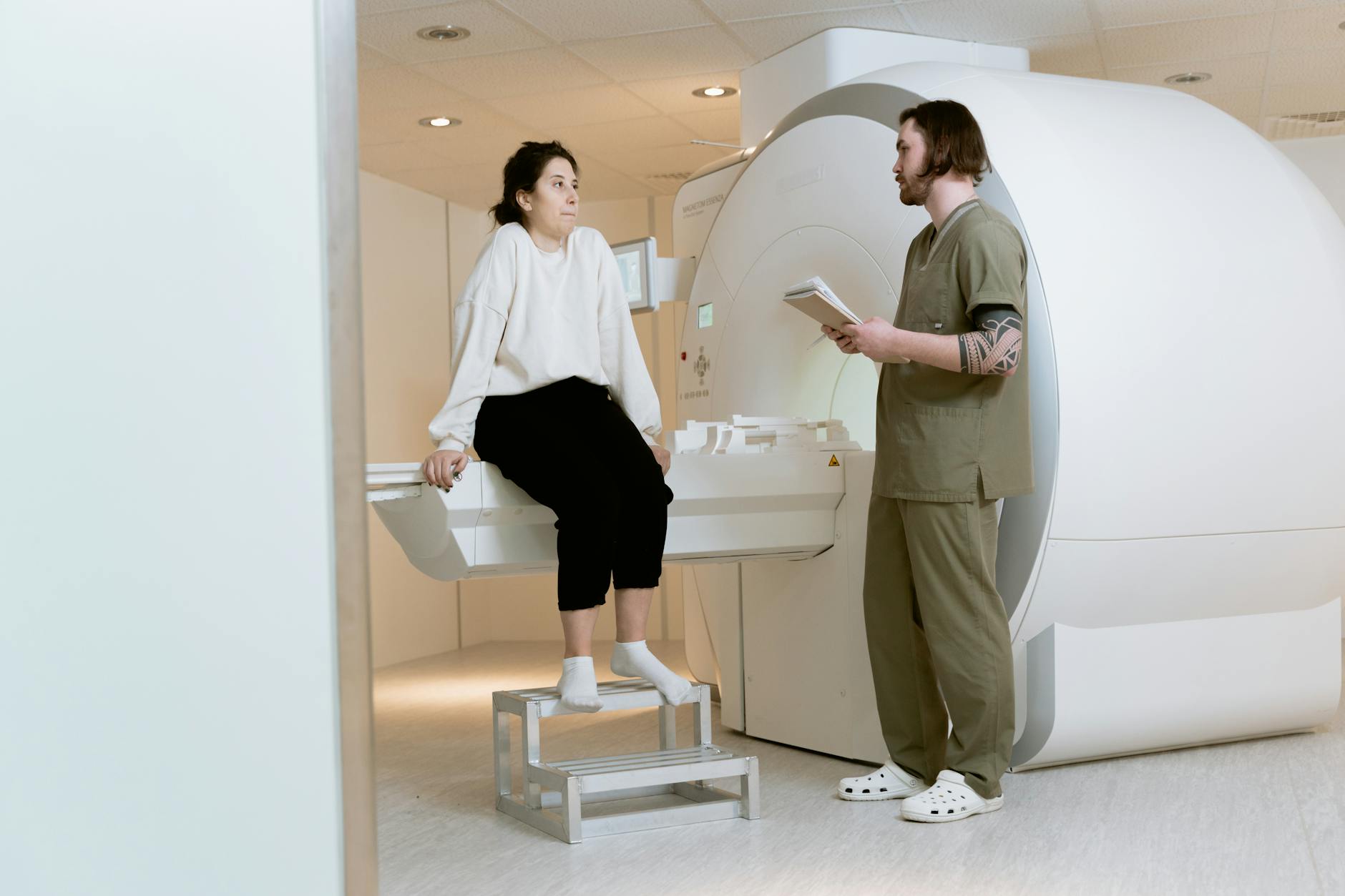
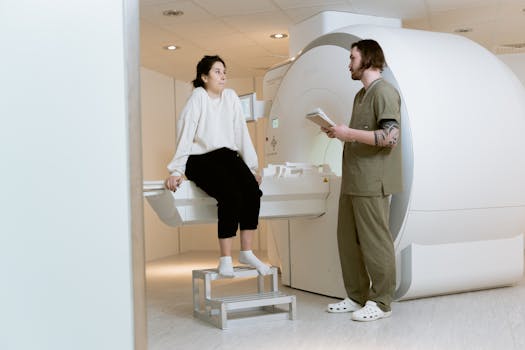
A patient consults with a technician in a modern MRI room, highlighting advanced healthcare facilities.Photo: MART PRODUCTION / Pexels

Navigating the Cost of MRI Scan Without Insurance

Unlock expert strategies to find affordable MRI options and ensure you receive necessary diagnostic imaging without financial strain.

Find Your Affordable MRI

Key Takeaways

  • ✓ MRI costs without insurance can range from $400 to $10,000+ depending on location, facility, and body part.
  • ✓ Cash pay discounts are often available and significantly reduce the sticker price.
  • ✓ Shopping around and comparing prices from different providers is crucial.
  • ✓ Financial assistance programs and payment plans can make MRIs more accessible.

How It Works

1
Understand Your Need

Consult with your doctor to confirm an MRI is medically necessary and to identify the specific body part or type of scan required. This helps narrow down your search for appropriate facilities.

2
Research & Compare Prices

Utilize online tools, direct calls to imaging centers, and doctor referrals to gather quotes for the exact MRI you need. Be sure to ask about cash pay discounts and all-inclusive pricing.

3
Explore Financial Aid

Investigate payment plans, financial assistance programs offered by hospitals or non-profits, and negotiate directly with providers. Sometimes, a lower price can be achieved through simple negotiation.

4
Schedule & Prepare

Once you've secured an affordable option, schedule your MRI. Ensure you understand any pre-scan instructions, such as fasting or medication adjustments, to avoid delays or rescheduling.

Understanding MRI Costs Without Insurance in the US
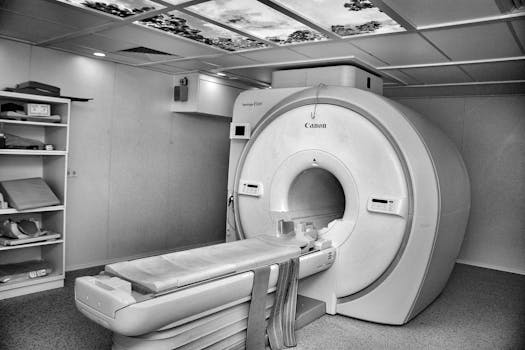
Black and white image of a modern MRI machine in a hospital room with overhead ceiling art.Photo: sirmudi_photography / Pexels
Magnetic Resonance Imaging (MRI) is a powerful, non-invasive diagnostic tool that uses a strong magnetic field and radio waves to create detailed images of organs, soft tissues, bone, and virtually all other internal body structures. For individuals without health insurance in the United States, the prospect of needing an MRI can be daunting due to the potentially high out-of-pocket costs. The price of an MRI can vary dramatically, ranging from a few hundred dollars to several thousand, depending on numerous factors. This variability makes it challenging for uninsured patients to budget and plan for these essential medical procedures. Understanding these factors is the first step towards navigating the complex landscape of healthcare costs. Key elements influencing the cost include the specific body part being scanned (e.g., brain, spine, knee, abdomen), whether contrast dye is required (which adds to the cost), the type of facility performing the scan (hospital-based outpatient department vs. independent imaging center), and the geographic location. Urban areas, especially major metropolitan centers, often have higher prices than rural areas, although competition in densely populated regions can sometimes drive prices down. Hospital-affiliated imaging centers typically charge more than freestanding, independent imaging facilities. This is often due to higher overheads, administrative costs, and the perception of being an 'all-in-one' medical solution. For an uninsured individual, a standalone imaging center is frequently the most cost-effective option. Furthermore, the complexity of the scan plays a significant role. A simple MRI of a single joint will invariably be less expensive than a multi-sequence MRI of the brain with contrast. The radiologist's fee for interpreting the images is usually bundled into the total cost, but it's always wise to confirm this when getting a quote. Anesthesia, if required (especially for claustrophobic patients or young children), will also add a substantial amount to the final bill. Without insurance, patients are often responsible for the full sticker price, which is rarely the true cost of the procedure. Hospitals and imaging centers have a 'chargemaster' rate, which is the official list price, but these rates are rarely paid by insured patients due to negotiated discounts. Uninsured patients, however, may initially be quoted these inflated rates, making negotiation and informed shopping absolutely critical. Understanding these underlying cost drivers empowers you to ask the right questions and seek out more affordable alternatives, ensuring you receive necessary care without facing insurmountable debt. Exploring options for affordable healthcare services is always a smart move when facing significant medical expenses.

Strategies for Finding Affordable MRI Scans Without Insurance

A healthcare worker in PPE using a laptop for remote work, symbolizing modern medicine and digital innovation.Photo: Gustavo Fring / Pexels
For those facing the need for an MRI without the buffer of health insurance, proactive strategies are essential to mitigate costs. Simply accepting the first quoted price can lead to significant overspending. The good news is that there are several proven methods to reduce the financial burden and make an MRI scan more accessible. The most effective strategy begins with thorough research and price comparison. Do not hesitate to call multiple imaging centers and hospitals in your area. When you call, be very clear that you are an uninsured, self-pay patient and ask for their 'cash pay' or 'self-pay' rate. Many facilities offer substantial discounts (often 30-70% off their standard rates) for patients paying upfront in cash or with a credit card, as it reduces their administrative burden and risk of non-payment. Be specific about the type of MRI needed (e.g., 'MRI of the lumbar spine without contrast') to ensure accurate quotes. Online resources and price comparison tools can also be invaluable. Websites like NewChoiceHealth.com, Healthcare Bluebook, or Fair Health Consumer allow you to search for average prices of medical procedures, including MRIs, in your specific zip code. While these provide estimates, they can give you a baseline for what a reasonable price might be and help you identify facilities that are significantly higher or lower than the average. Some platforms even allow you to book appointments directly with discounted rates. Another powerful strategy is to ask your referring physician for recommendations. Doctors often have relationships with imaging centers and may know which ones offer more competitive prices or are willing to work with uninsured patients on payment plans. They might also be able to provide a referral to a standalone imaging center rather than a more expensive hospital-based unit. Negotiation is another critical, yet often overlooked, tactic. Once you have a few quotes, you can leverage them to negotiate with your preferred facility. For example, if one center quotes you $800 and another quotes $1200, you can ask the $1200 facility if they can match or beat the lower price. Many providers are willing to negotiate, especially if it means securing your business. Don't be afraid to ask about payment plans. Even if you can't get a steep discount, spreading the cost over several months can make it much more manageable. Some facilities offer interest-free payment plans, while others might charge a small administrative fee. Always inquire about what the quoted price includes: does it cover the radiologist's reading fee, or is that a separate bill? Understanding the full scope of charges upfront prevents unexpected costs down the line. By employing these strategies, uninsured patients can significantly reduce the cost of an MRI and avoid financial distress.

Exploring Financial Assistance and Payment Options for Uninsured MRIs

Calculator placed on financial graphs and reports showcasing data analysis and business documentation.Photo: RDNE Stock project / Pexels
Beyond direct negotiation and price comparison, several financial assistance programs and alternative payment arrangements exist that can significantly alleviate the burden of an MRI scan without insurance. These options are designed to help patients access necessary medical imaging even when facing financial constraints. One of the primary avenues to explore is financial assistance programs offered directly by hospitals and larger healthcare systems. Many non-profit hospitals, under their community benefit obligations, have programs to help low-income or uninsured patients. These programs, sometimes called 'charity care' policies, can offer partial or even full waivers of medical bills based on income and family size. It's crucial to inquire about these programs early in the process, as there's usually an application process requiring documentation of income and assets. Don't assume you won't qualify; eligibility criteria can vary widely. Another option is seeking assistance from non-profit organizations and foundations dedicated to helping patients with medical costs. While less common for general MRI costs, some organizations specialize in specific conditions (e.g., cancer, neurological disorders) and might offer grants or financial aid for diagnostic imaging related to those conditions. A quick online search for 'medical financial assistance programs' or 'patient assistance for imaging' along with your specific condition can yield relevant results. Your doctor's office or a hospital social worker can also be excellent resources for identifying such programs. For those who don't qualify for significant assistance, payment plans remain a vital tool. As mentioned, many imaging centers and hospitals are willing to set up interest-free monthly payment plans. It's always better to establish a payment plan directly with the provider than to let a bill go to collections, which can negatively impact your credit. Be sure to get the terms of any payment plan in writing. Additionally, consider health savings accounts (HSAs) or flexible spending accounts (FSAs) if you anticipate future medical needs and have access to these through an employer or a high-deductible health plan. While this doesn't help with immediate uninsured costs, it's a forward-looking strategy for managing future medical expenses with pre-tax dollars. Finally, for individuals who find themselves frequently needing medical care without insurance, exploring options for catastrophic health plans or short-term insurance policies might be beneficial, even if they come with high deductibles. While these won't cover pre-existing conditions or elective procedures, they can provide a safety net for unexpected and costly diagnostic tests like an MRI. Understanding and leveraging these financial assistance and payment options can transform an otherwise overwhelming expense into a manageable one, ensuring that the cost of an MRI without insurance doesn't prevent you from getting the essential care you need. Learn more about managing healthcare costs without insurance for a broader perspective.

Tips for Reducing Your Out-of-Pocket MRI Expense

Two women in a business meeting discuss documents while sitting on a green sofa.Photo: RDNE Stock project / Pexels
Navigating the healthcare system without insurance can feel like an uphill battle, especially when faced with a significant diagnostic expense like an MRI. However, armed with the right knowledge and a proactive approach, you can significantly reduce your out-of-pocket costs. Here are some actionable tips to help you save on your MRI scan without insurance: * **Prioritize Independent Imaging Centers:** As a general rule, standalone imaging centers are almost always less expensive than hospital-based facilities for the same MRI. They have lower overheads and often compete more aggressively on price. Always get quotes from both types of facilities. * **Get a Written Quote:** Verbal quotes can be easily misunderstood or changed. Always ask for a written, all-inclusive quote that clearly states what is covered (e.g., technical fee, radiologist's interpretation fee, contrast dye if applicable). This prevents surprise billing. * **Ask About Global Billing:** Confirm if the quote includes both the technical component (the scan itself) and the professional component (the radiologist's reading). Sometimes these are billed separately, leading to unexpected additional costs. * **Consider Location:** If you live near a state border or a less expensive region, consider expanding your search. Driving a little further might result in hundreds or even thousands of dollars in savings. * **Inquire About Older Equipment Discounts:** While not always ideal, some older MRI machines (e.g., 1.5 Tesla instead of 3 Tesla) might offer a lower price point if the image quality is still sufficient for your diagnosis. Discuss this with your referring physician. * **Avoid Emergency Room MRIs:** Unless it's a true life-threatening emergency, avoid getting an MRI in an emergency room setting. ERs are the most expensive place to receive any medical service, including imaging, due to their readiness to handle critical cases. * **Leverage Telehealth Consultations:** Before an MRI, a telehealth consultation with a doctor might be a more affordable way to get the initial referral and discuss whether an MRI is absolutely necessary, potentially saving you from an unnecessary scan. * **Check for Medical Tourism Options (Extreme Cases):** For very high-cost, complex MRIs, some individuals consider medical tourism where procedures are significantly cheaper in other countries. This is an extreme option and requires careful research into quality and follow-up care, but it exists for those considering all possibilities. By diligently applying these tips, you can empower yourself to make informed decisions and secure the most affordable MRI scan possible without relying on insurance. Remember, every dollar saved is a dollar you keep in your pocket, making essential medical care more accessible.

Comparison

FeatureIndependent Imaging CenterHospital Outpatient Dept.Cash Pay Discount Program
Average Cost (uninsured)$400 - $2,000$1,500 - $10,000+$500 - $2,500
Negotiation PotentialHighModerateN/A (already discounted)
Speed of AppointmentOften fasterCan be longerVariable
Payment Plans OfferedFrequentlyOftenLess common (upfront payment)
Ancillary Services (e.g., ER access)✗✓✗
Radiologist Interpretation IncludedUsuallyUsuallyUsually

What Our Readers Say

5 ★★★★★

"I was quoted over $3,000 for an MRI of my knee without insurance. After calling three independent centers, I found one that offered a cash pay rate of $750. It was a huge relief and saved me so much stress."

5 ★★★★★

"My doctor recommended an MRI for my back pain. Without insurance, I used an online price comparison tool and secured an appointment for $600, which included the radiologist's report. It was incredibly straightforward."

5 ★★★★★

"Facing an MRI bill of $2,500, I contacted the hospital's financial aid department. After submitting my income documents, they approved me for a 70% discount, bringing my total down to $750. Don't be afraid to ask for help!"

4 ★★★★☆

"The process of finding an affordable MRI without insurance took some effort, but it was worth it. I ended up paying $950 after negotiating with a local imaging center, which was still a lot, but far better than the initial $4,000 quote."

5 ★★★★★

"I needed an urgent MRI, and the initial hospital quote was astronomical. I found a standalone clinic that did the same scan for $850 cash. They were very transparent about the cost and payment options."

Frequently Asked Questions

What is the average cost of an MRI scan without insurance in the US?
The average cost of an MRI scan without insurance in the US can vary widely, typically ranging from $400 to over $10,000. Factors like the body part being scanned, the need for contrast dye, the type of facility (hospital vs. independent clinic), and geographic location significantly influence the final price. Always seek specific quotes.
Can I negotiate the price of an MRI if I don't have insurance?
Yes, absolutely! Many imaging centers and hospitals are open to negotiating prices for self-pay patients. Always ask for a 'cash pay' or 'self-pay' discount, as these can often be 30-70% lower than the sticker price. Having quotes from multiple facilities can strengthen your negotiation position.
How can I find imaging centers that offer lower prices for uninsured patients?
To find lower-priced options, start by calling independent, freestanding imaging centers directly and ask for their self-pay rates. Utilize online price comparison tools like Healthcare Bluebook or NewChoiceHealth.com, and ask your referring physician for recommendations on cost-effective facilities in your area.
Is it cheaper to get an MRI at a hospital or an independent imaging center?
Generally, it is significantly cheaper to get an MRI at an independent imaging center compared to a hospital outpatient department. Independent centers often have lower overheads and more competitive pricing for self-pay patients. Always compare quotes from both types of facilities before making a decision.
What should I ask when getting a quote for an MRI without insurance?
When getting a quote, always ask for the 'all-inclusive cash pay price' for the specific MRI you need (e.g., 'MRI of the brain with contrast'). Confirm if the price includes the technical fee, the radiologist's interpretation fee, and any necessary contrast dye. Also, inquire about payment plans or financial assistance programs.
Who should consider paying for an MRI out-of-pocket?
Individuals without health insurance, those with high-deductible plans who haven't met their deductible, or those whose insurance doesn't cover a specific type of MRI should consider paying out-of-pocket. By actively seeking cash-pay discounts, you can often secure a price lower than what you might pay through an insurance plan's deductible.
Are there risks associated with choosing a cheaper MRI facility?
While it's important to be cost-conscious, ensure the facility is accredited (e.g., by the American College of Radiology) and uses modern equipment. Cheaper doesn't necessarily mean lower quality, but always confirm the credentials of the facility and the interpreting radiologists. Your referring doctor can often provide guidance on reputable, affordable centers.
Will MRI costs continue to rise for uninsured patients?
Healthcare costs, including MRI scans, have historically trended upwards in the US. However, increased transparency laws and the growth of cash-pay medical services are creating more competitive environments. While sticker prices may rise, the availability of negotiated cash rates and financial assistance programs may help mitigate the impact for uninsured patients.

Don't let the lack of insurance prevent you from getting a necessary MRI scan. By understanding the factors influencing the cost of an MRI scan without insurance and applying smart strategies, you can find affordable options and access the diagnostic imaging you need. Take control of your healthcare costs today.

Topics: cost of mri scan without insuranceMRI cost uninsuredaffordable MRI optionsMRI without insurance USsaving on MRI scan
Leo List

IE Escorts NO Escorts US Escorts NZ Escorts AU Escorts
Brampton weed
Adultwork EstrelaBet Vai de Bet R7 Bet Betão Galera Bet Rainbet Bet9ja Shop SportyBet BetKing Sisal Loto Foot Hollywoodbets YesPlay Odibets RushBet Jugabet BetWarrior BetCity MSport betPawa Fortebet